
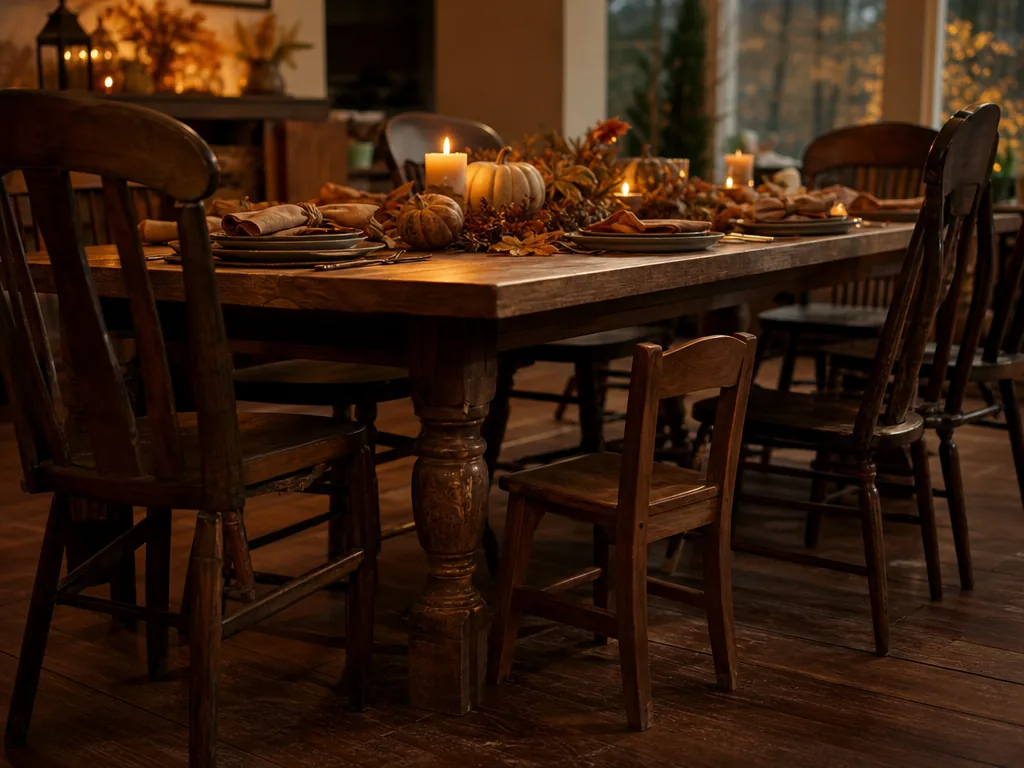
You manage a team at work. You pay a mortgage, raise children, and make hard decisions every week. Then you walk into your parents’ house on Thanksgiving, and within an hour you are sulking at the table like a twelve-year-old. Your mother comments on your plate, your brother makes the same old joke, and something inside you shrinks.
If this sounds familiar, you are not immature, and you are not alone. Thanksgiving anxiety often has less to do with the turkey, the traffic, or the dishes than with a quieter force: the pull of the person you used to be in that house. This article explains why the family table can make you feel young again, and how you can stay your adult self while you sit at it.
What Thanksgiving anxiety really is
Some of the tension before the holiday is practical. There is food to cook, money to spend, and hours of travel. Yet for many people, the dread runs deeper than a busy schedule. It shows up as a tight chest on the drive over, a short temper in the kitchen, or a strange heaviness the moment you hear a familiar voice in the hallway.
In other words, Thanksgiving anxiety is often a reaction to a place and to a group of people who knew you before you became who you are now. The house has not changed much. The seating has not changed much. Unfortunately, the way your family sees you may not have changed much either.
Why grown adults regress at the family table
Psychologists sometimes call this experience holiday regression. The word sounds clinical, but the idea is simple. Under stress, we tend to fall back on older ways of coping, especially in the places where we first learned them.
Clinical psychologist Shannon Sauer-Zavala writes about this in Psychology Today. In times of stress, she explains, it is easier to slip into familiar patterns. You learned the behaviors your family pulls from you early, practiced them often, and repeated them for years. She also points out that personality keeps developing through adulthood. Most of us grow calmer and more conscientious with age. Your family, however, may still be relating to an older version of you.
That is why Thanksgiving anxiety can feel so confusing. You have grown, but the room around you still expects the child you were.
The roles we play at the table
Family therapists have long described the family as an emotional unit. In this system, every member plays a part. Murray Bowen, one of the pioneers of this view, placed great weight on what he called differentiation of self. It is the ability to stay emotionally close to your family while still thinking and acting as your own person. An overview of the concept in Springer’s family therapy encyclopedia describes it as the core idea of his theory.
Put simply, families tend to resist change. When one member shifts, the others often push, gently or not, to restore the old balance. At Thanksgiving, that push usually arrives through familiar roles:
- The achiever is expected to bring good news and make the family proud. If you grew up as the golden child, a quiet year can feel like failure.
- The peacekeeper watches every face at the table and jumps in whenever a conflict starts.
- The black sheep gets blamed for the tension, even when they have barely spoken. The family scapegoat often feels the dread weeks in advance.
- The little helper ends up in the kitchen all day, serving everyone else first.
- The baby is never quite taken seriously, no matter how old they are.
Some little helpers learned that part very early. They were caught in emotional parentification as children. They cared for their parents’ feelings long before they could care for their own.
None of these roles is a verdict on who you are. Still, noticing yours can explain much of your Thanksgiving anxiety. You are not only visiting a house. You are being asked to step back into a part.
How Thanksgiving anxiety shows up in the body
Old roles do not live only in memory. They live in the body as well. A certain tone of voice can act as an emotional trigger. So can the smell of a particular dish, or the sight of your childhood bedroom. Each one sets off feelings before you have had time to think.
You may notice your shoulders rising, your breath getting shallow, or your jaw locking. Some people feel a rush of irritation. Others go quiet and small. These reactions are the nervous system doing its old job, preparing you for a threat it remembers. Learning how to heal emotional triggers begins with catching these physical signs early, before they turn into a sharp reply or a long silence.
For people with high-functioning anxiety, this can be especially tiring. From the outside, they look calm and helpful all day. Inside, they are scanning the room and bracing for the next comment.
A surgeon who became the baby again
When I worked in counseling, I met a respected surgeon who dreaded Thanksgiving every year. At work, people trusted him with their lives. At his parents’ table, his older sisters still finished his sentences and his father still cut his turkey for him, half as a joke.
For years he laughed along, then drove home furious and sleepless. In our sessions, we did not try to change his family. Instead, we worked on noticing the moment he started to shrink. That year, when his father reached for the carving knife, he smiled and said, I’ve got it, Dad. It was a tiny sentence. Yet he told me afterward that it felt like the first time he had eaten Thanksgiving dinner as a grown man.
Staying your adult self at the family table
You cannot rewrite your family in one evening. You can, however, keep a firmer hold on the adult you have become. These steps can ease Thanksgiving anxiety while you are in the room.
1. Name the role as it happens. A silent sentence such as there’s the peacekeeper again creates a small space between you and the pattern. That space is where choice lives.
2. Anchor yourself in the present. Before you walk in, take a few slow breaths and remind yourself of one fact about your adult life: your job, your home, a recent accomplishment. Simple practices for nervous system regulation, like feeling your feet on the floor or lengthening your exhale, help your body remember that you are not twelve.
3. Answer as the adult, not the child. When the old joke arrives, you do not have to laugh, sulk, or fight. A calm, brief answer, followed by a change of subject, keeps you in your current age.
4. Take short breaks. Step outside, check on the dog, or offer to walk to the store. A few minutes away can reset your body before the tension builds.
5. Comfort yourself afterward. Many people hold it together at the table and fall apart in the car. Plan a gentle landing: a quiet evening, a warm bath, or a call with a friend who knows the real you. Skills for self-soothing are useful here.
When the child inside needs your care
Sometimes the part of you that feels twelve again needs more than a coping trick. It may need attention. The sadness or anger that rises at the family table often belongs to a child who once felt unseen, criticized, or responsible for everyone’s mood.
This is where reparenting yourself can help. It means offering your younger self the understanding and protection they did not receive back then. You might write a short note to that child, or simply say inside, I see how hard this was for you, and I’m here now. Building a steady inner child connection through the year can make holidays less overwhelming.
If your Thanksgiving anxiety brings panic attacks, depression, or memories of abuse, please reach out to a licensed therapist. You deserve support that goes deeper than one holiday.
Journaling prompts for Thanksgiving anxiety
Before or after the holiday, give yourself fifteen minutes with these questions.
- What role did I play at the family table as a child, and who gave it to me?
- Which moment of the day makes me feel youngest, and what happens in my body then?
- What is one thing about my adult life that my family does not fully see?
- What would my twelve-year-old self need to hear from me this Thanksgiving?
- How do I want to feel when I drive away, and what small choice could help?
Keep the answers somewhere you can read them again next year. You may be surprised by how much has shifted.
Conclusion: you can go home without going back
Thanksgiving anxiety is rarely about the meal itself. More often, it comes from returning to a house, a table, and a family system that still remember you as a child. Old roles pull, the body reacts, and suddenly you feel small in a place where you once were small.
The good news is that noticing the pattern already weakens it. You can name your role, stay anchored in your adult life, and care for the child inside instead of becoming them. Your family may not change this year. Even so, you can sit at the same table as the person you are today, and that is a quiet kind of gratitude too.
Check out the author’s book here: Healing Your Childhood Wounds Workbook

Leave a Reply